Site Seeing 230 | 2026
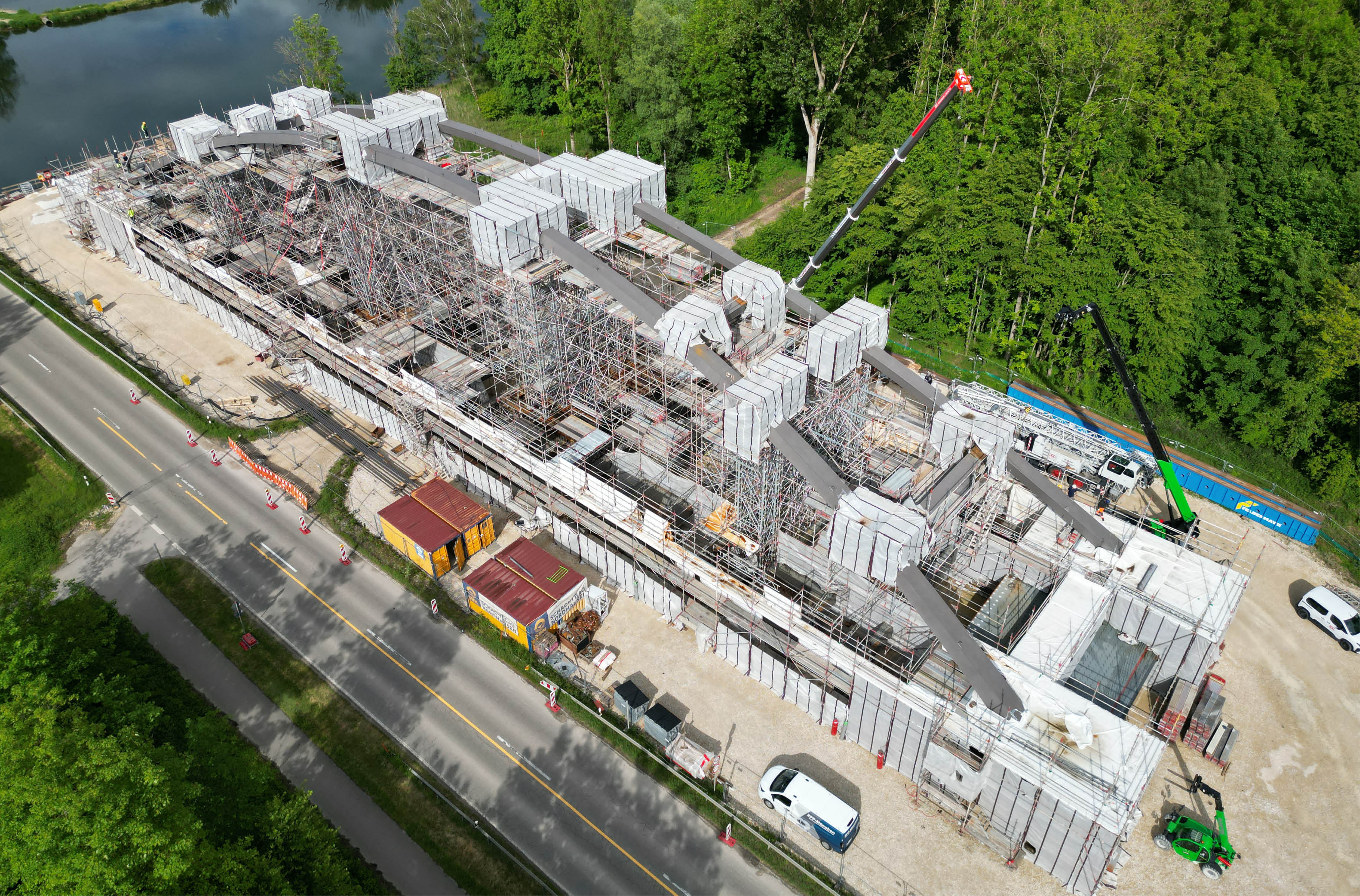
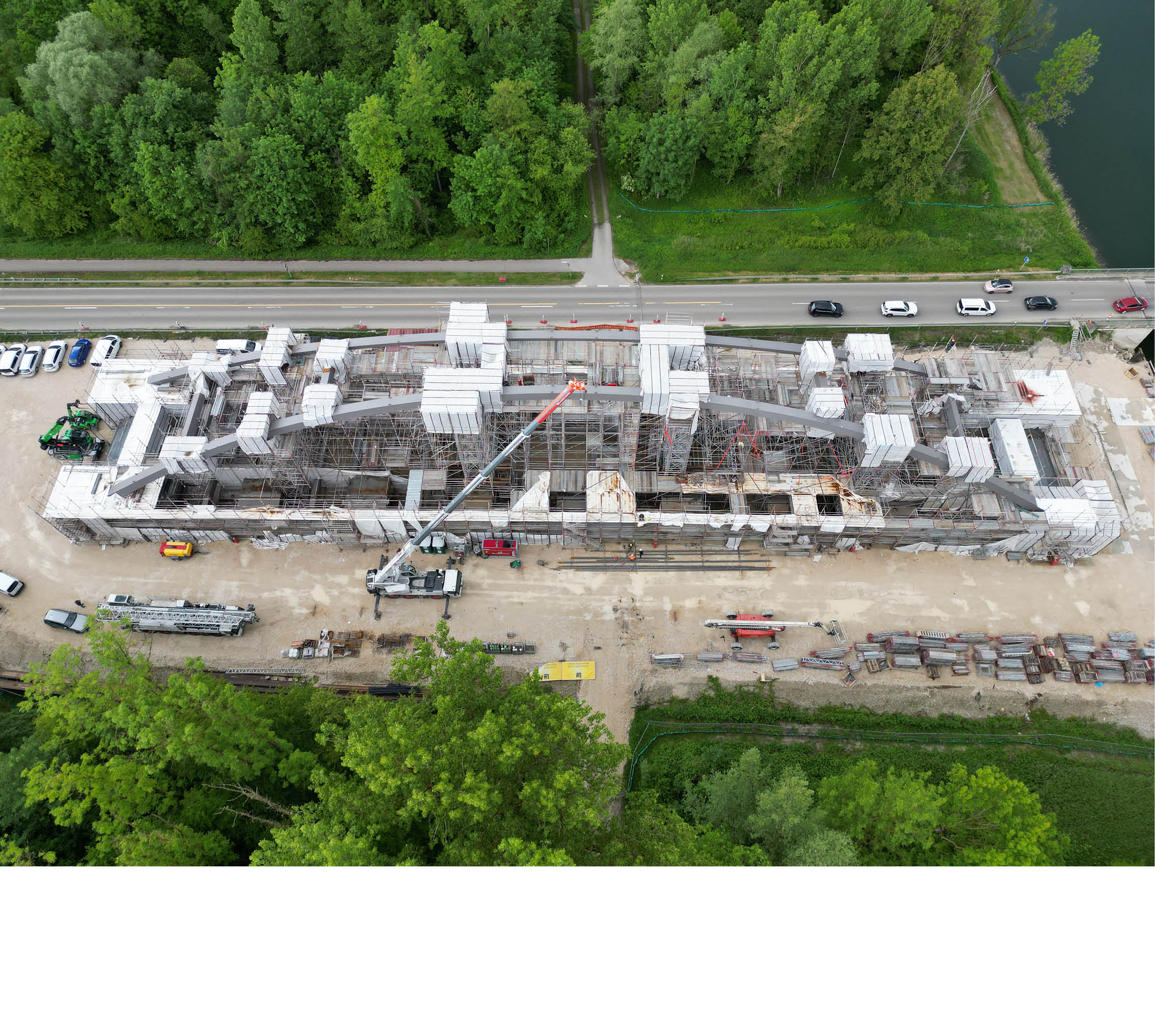
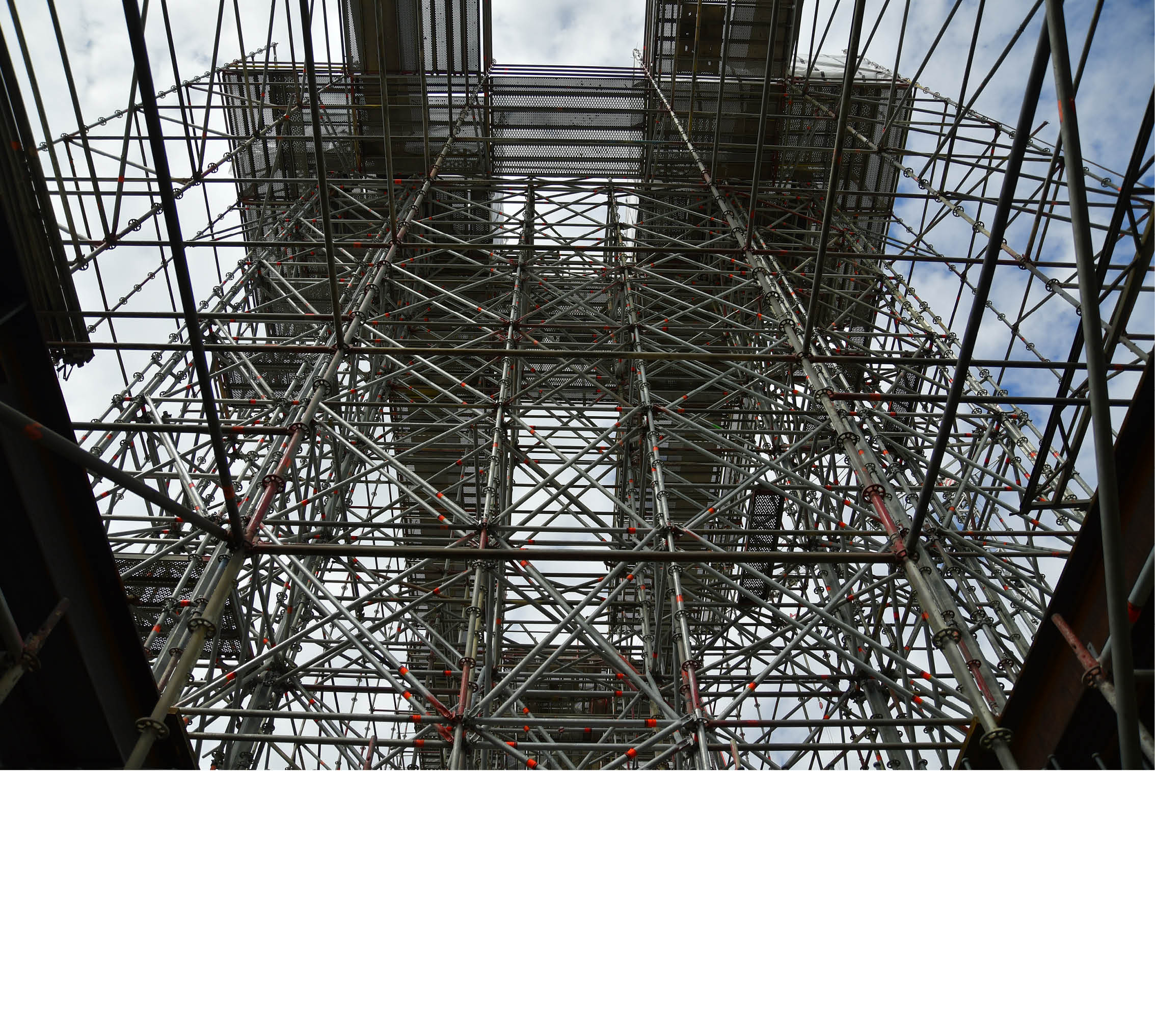
Like many other bridges in Germany, the bridge over the Danube at Marxheim, built in 1953, is showing its age – a new one to replace it is urgently needed to maintain the traffic infrastructure in the eastern part of the Danube-Ries district. The construction is a network tied arch bridge, over 100 metres long and designed without river piers. To provide temporary support for the bridge superstructure, the scaffolding construction company Sottmann Spezial Gerüstbau GmbH devised an integrated scaffolding solution based on the Allround System. The Allround Scaffolding was used here not only for working and for access, but also for shoring in combination with the Allround Heavy-Duty Tower XL. The crucial advantage: it was possible to combine work scaffolding and heavy load transmission in a single continuous system. As a result, the scaffolding remained accessible at all times for the trades involved in the work, and the necessary accesses were adapted to match the respective construction phases and to the specific conditions at the site. At the same time, the heavy loads due to the bridge superstructure were safely absorbed by the integrated Allround Heavy-Duty Towers XL. In this project, the load per Heavy-Duty Tower XL was up to 85 tonnes.
- Complete accessibility: by integrating the Heavy-Duty Towers XL into the Allround Scaffolding system, the scaffolding remained usable as a coherent structure allowing work and access.
- High flexibility: accesses, work surfaces and scaffolding geometries were adapted to the respective construction phases and to the specific conditions of the network tied arch bridge. The tension rods and the complex geometry of the network tied arch bridge were taken into account in particular during planning and implementation.
- High load-bearing capacity and easy access combined: the work scaffolding function was combined with the shoring function. This allowed heavy loads to be selectively absorbed by the Heavy-Duty Towers XL without having to resort to a separate shoring system.
- Digital 3D advance planning: Sottmann’s engineering office planned the structure digitally using LayPLAN CAD. This allowed complex requirements to be taken into account as early as the planning phase, and the scaffolding geometry to be adapted exactly to the structure.
- Efficient material planning: using the LayPLAN MATERIALMANAGER enabled dependable material lists to be generated for requirement planning and for logistics.
- Lightweight and compact parts: thanks to Layher’s Lightweight technology, the specified weights were met while a high load-bearing capacity was attained.
- Rapid assembly and dismantling: the modular system components permit efficient assembly. Dismantling of the Heavy-Duty Towers XL does not require any expensive steelwork: these towers are simply unscrewed and are broken down apart into their compact parts.
- Adaptable down to the last detail: it was also possible to meet additional on-site requirements, such as platform stairtowers for safer site access, while remaining within the same system.
Integrated scaffolding solution: for construction of the bridge over the Danube at Marxheim (Germany), Sottmann Spezial Gerüstbau GmbH came up with an innovative scaffolding solution: use of Allround Scaffolding in Lightweight technology for the work scaffolding permitted precise adaptation to the geometry, rapid assembly thanks to lightweight and compact parts, plus provision of shoring with the same system. To ensure dependable transmission of loads from the bridge superstructure, Allround Heavy-Duty Towers XL were simply integrated into the work scaffolding as shoring. The load transmitted by each Heavy-Duty Tower XL was up to 85 tonnes.